2014-02-22
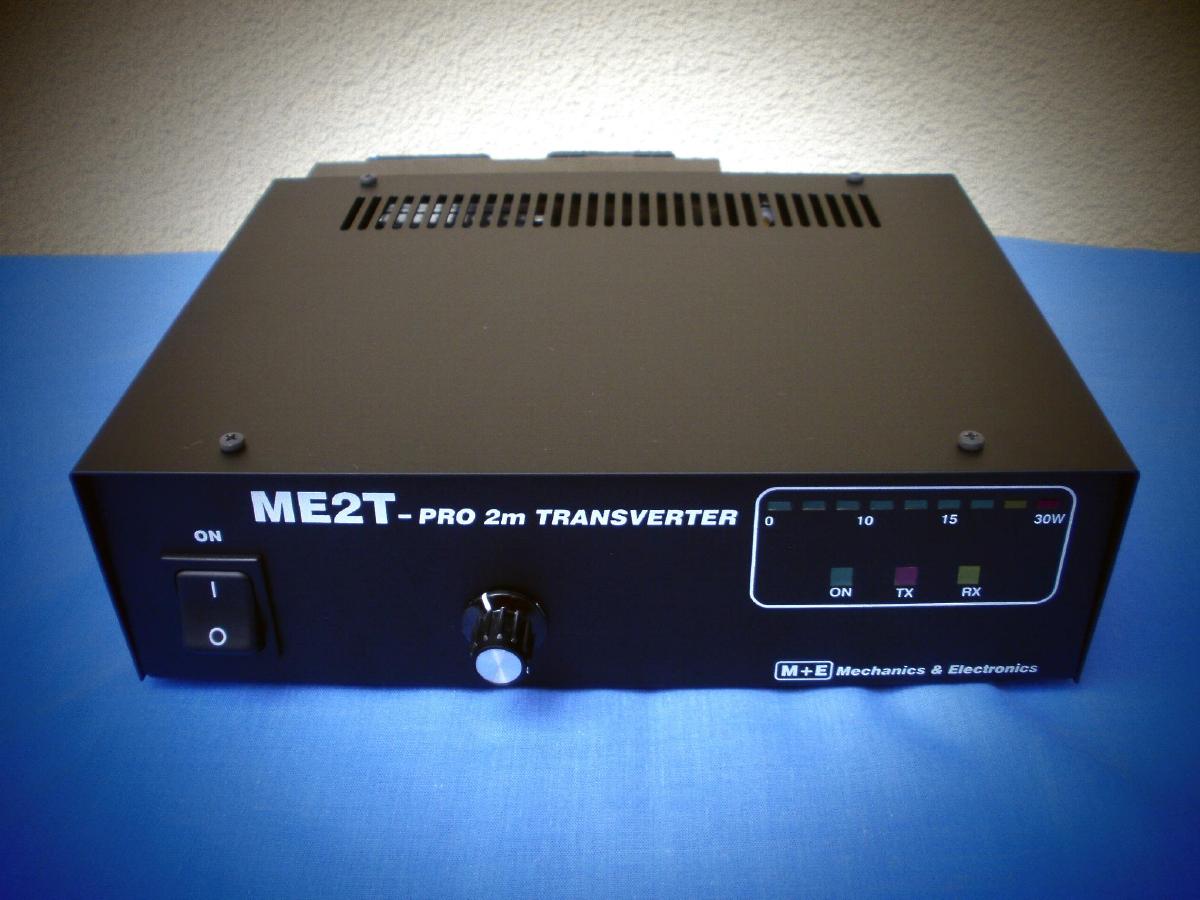
After the successful ME2-T transverter project we decided to build the -PRO
version of this transverter.
The ME2T-PRO is a new generation high performance transverter with modern 3rd
generation components, has low noise,
very good dinamic range on receiving section and clear and very stable
transmitting signal.
You can find the block diagram of the mixer unit
here.
The built in military class low phase noise TCXO provide easy work also on FSK
modes.
The transverter can work between 144-146MHz with low RX NF and high OIP3.
The Mitsubishi RF module provide good IMD signal and 30W output power.
The ME2HT-PRO basically same as ME2T-PRO but with 80W RF module.
Special thanks for HA8ET for the RF simulations and the most RF design.
Local Oscillator
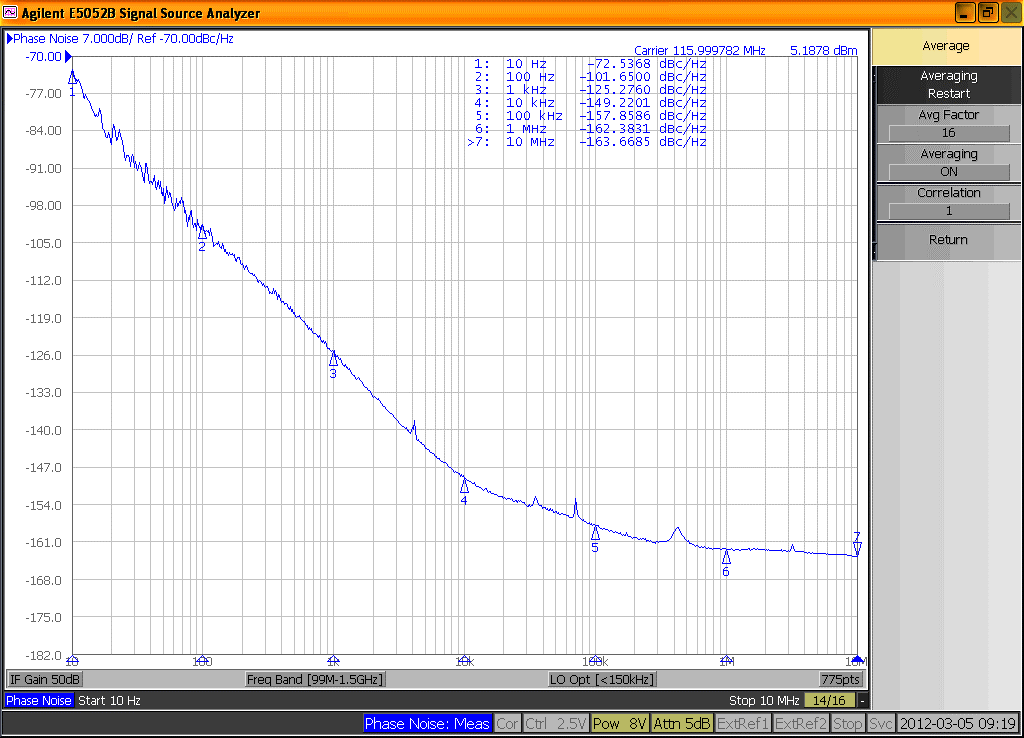
The high stability TC23-5T
type TCXO ( <1ppm btn 0-50 degr. C, <0.5ppm on 25C ) with low phase noise give +5dBm signal on
116.000MHz.
The TCXO frequency possible
adjust with inner trimmer capacitor (+-2ppm) but it's not necessary because
the stability is better than +-1ppm/Year.
TCXO stability and the phase noise is better than most modern transceiver.
The output signal of the LO is about +17dBm, it produce the ASB
ASL550 3rd generation MMIC. The clear
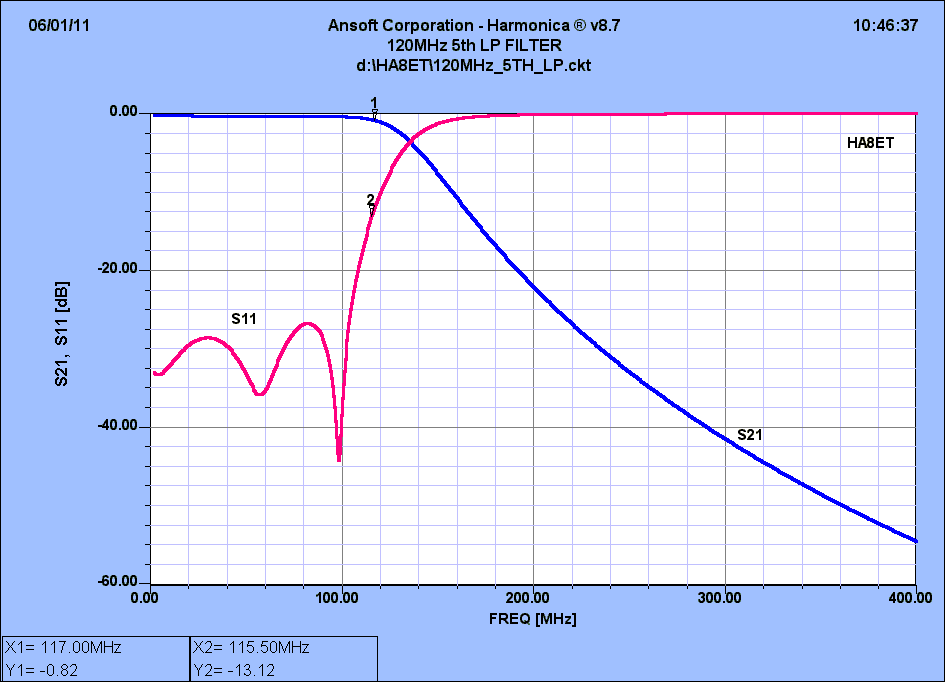
output signal provide the built in 2x 5th LP filter.
The output signal of the LO is clear the 2nd harmonics is lower than -70dB.On
case high level RX mixers we using 2nd ASL550 amplifier( +22dBm)
The simulated caracteristics of the 5th order LPF filter:
The measured TCXO phase noise:
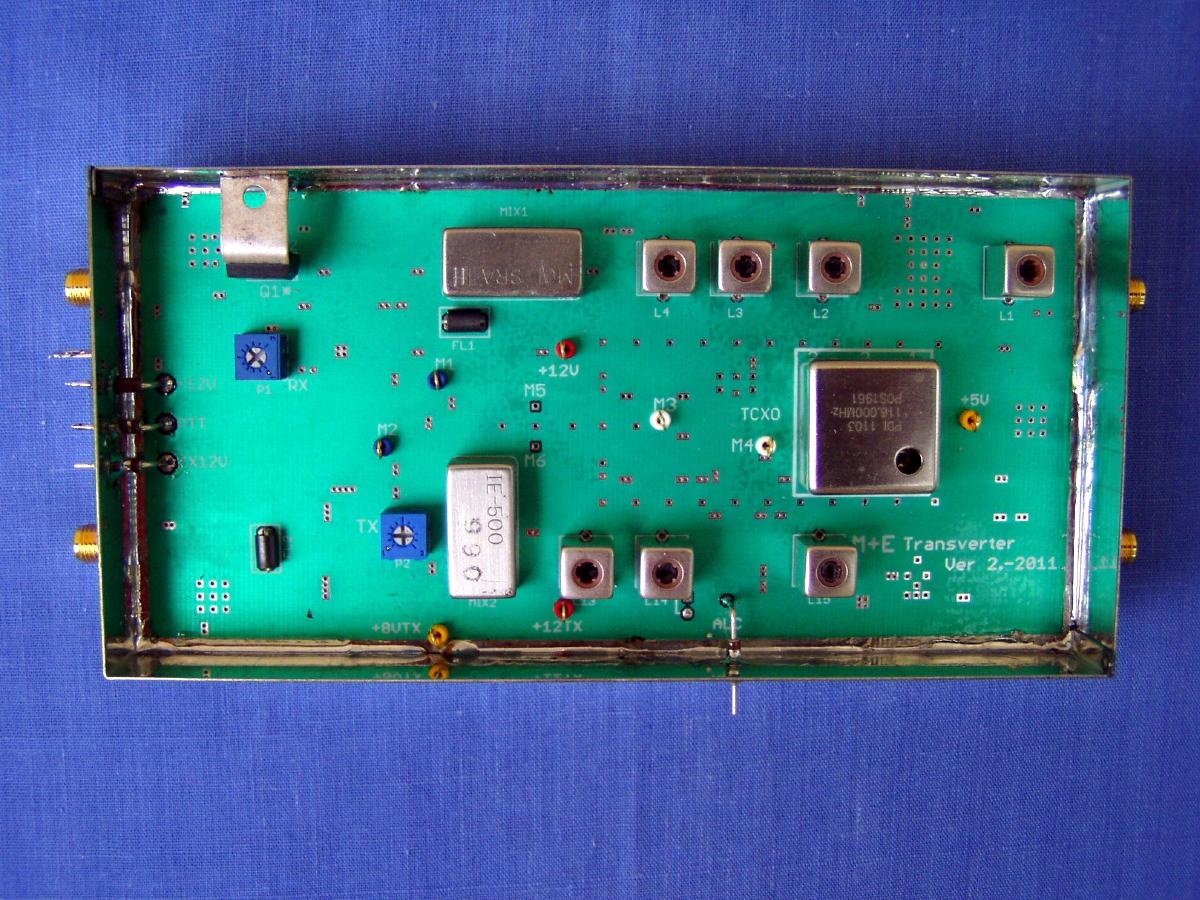
The +17dBm output signal can check on M3 measure pin. This signal is attenuated
by -10 and -3dB attenuators to the TX and RX balance mixers.
We using SRA1-H
type +17dBm mixer in
the RX mixer.+23 or +30dBm mixer is also available( option)
In case the optional +30dBm military class RX mixer (DBM-188)
we build in second LO amplifier stage. The real TX and RX LO signals
you
can check on M2 and M1 points with DC voltmeter.
RX
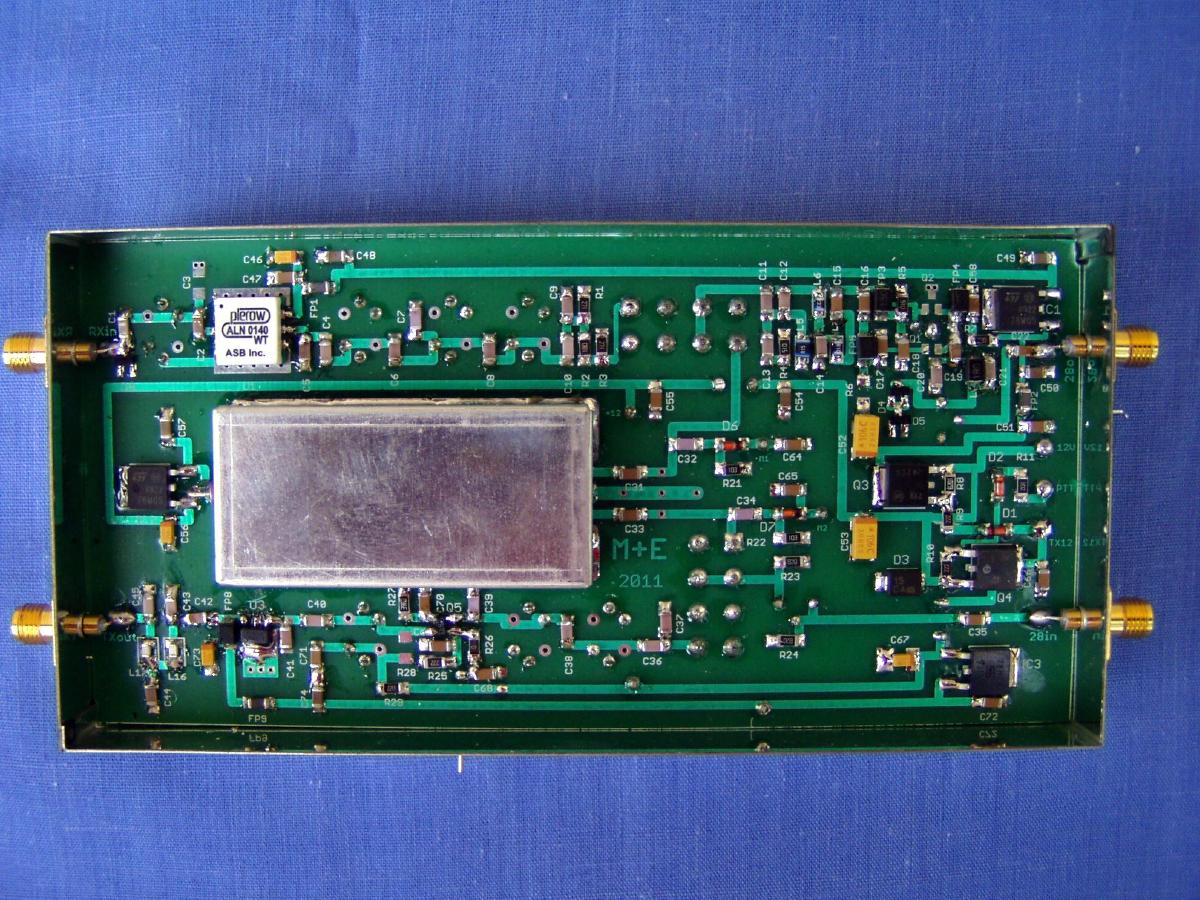
The 144-146MHz input signal passes through the input filter to the input of ASB
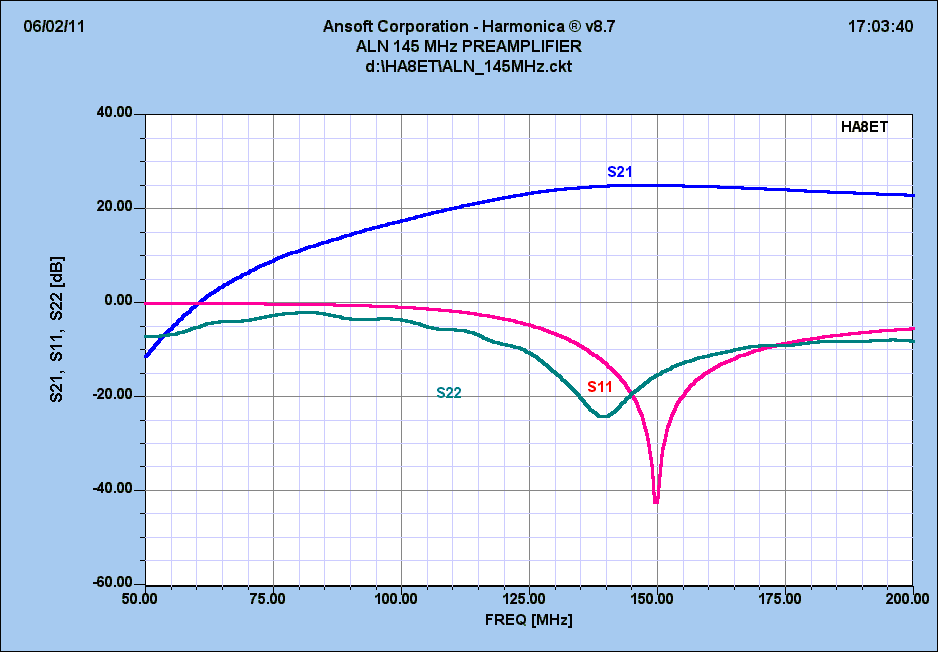
ALN0140WT LNA. The gain is approx. 21 dB,
the noise figure is 0.7dB
the OIP3 is >30dBm! ALN0140WT has an exceptional performance of low noise
figure, high gain, high OIP3, and low bias current. The stability
factor is always kept more than unity over the application band in order system
environment.
Impedance of the MMIC is 50 Ohm both I/O - it provide easy connect to the output
3rd order BPF.
PGA-103+ low noise high dinamic range front end is available from January 2013.
PGA-103+ produce around 0.6dB NF and +12dBm IIP3!
Simulated ALN0140WT LNA
The simulated caracteristics of the 3rd BPF:
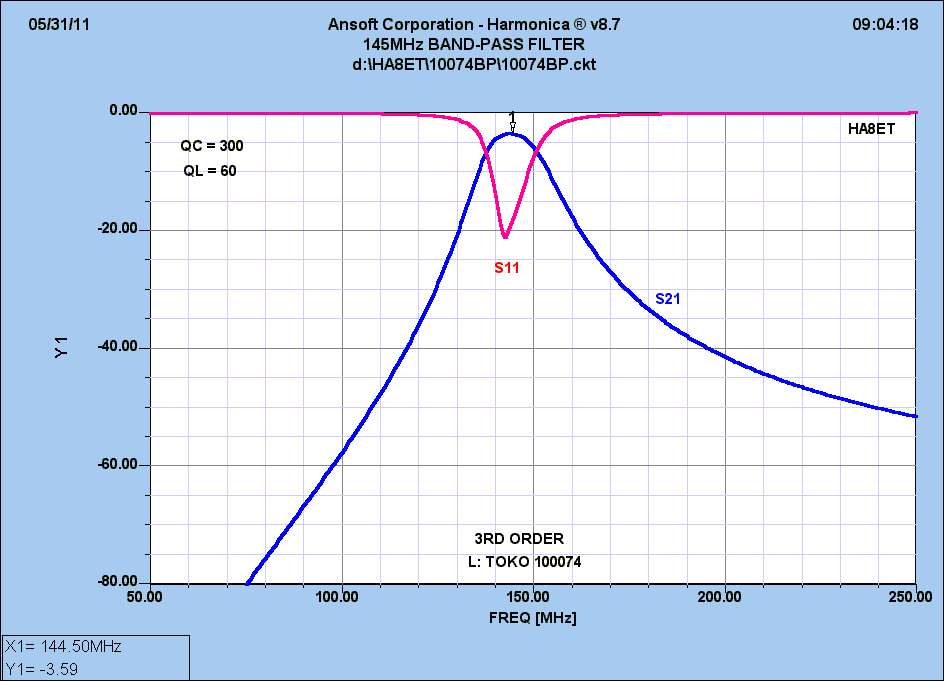
The 144-146MHz
signal goes through the band pass filter providing a suitable selectivity. The balanced mixer MX1 mixes the
input signal down to 28-30
MHz loosing
approx. 6 dB in the process. The IF signal is amplified approx. 10 dB in a low noise
high current
J-FET (P8002). The final PI filter
increases the selectivity considerably. The output signal is can set to optimal
value with the RX gain poti.
Chracteristics of diplexer unit:
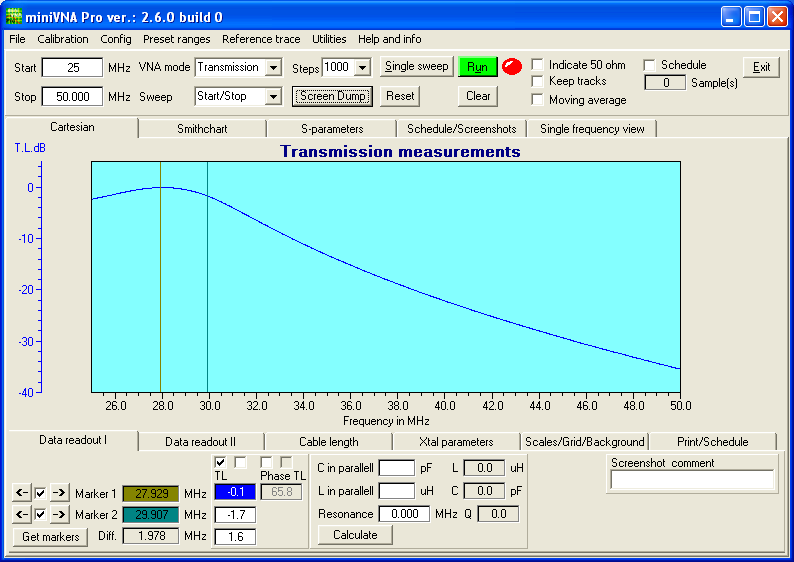
Caracteristics of 28MHz IF amp. & LPF filter:
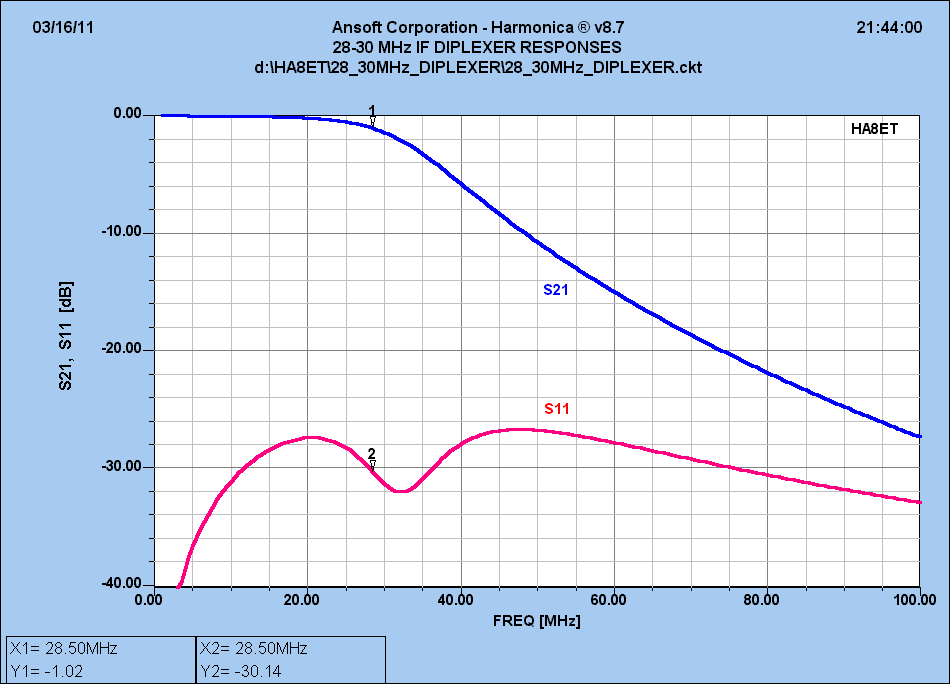
Diplexer full simulation: 28MHz LPF simulation
TX
The transmit mixer, MX2 only needs approx. -10dBm 28 MHz IF signal
from the transceiver. A suitable level can be achieved by adjusting
P2(TX) in the
attenuator. Lot of transceivers has lower or much higher IF
output level. To solve this problem we built in
an
additional jumperable and variable 5W/-20dB attenuator. You can
switch on/off easy the attenuator with different jumpers.
The fine level setting possible with the poti P1 on the attenuator unit across the
slots of the top cover.
On latest version we solved vy low level IF out problem of most ICOM radios(
-20dBm)
We built in +15dB jumperable IF amplifier so ME2T-PRO is usable easy to this
radio types.
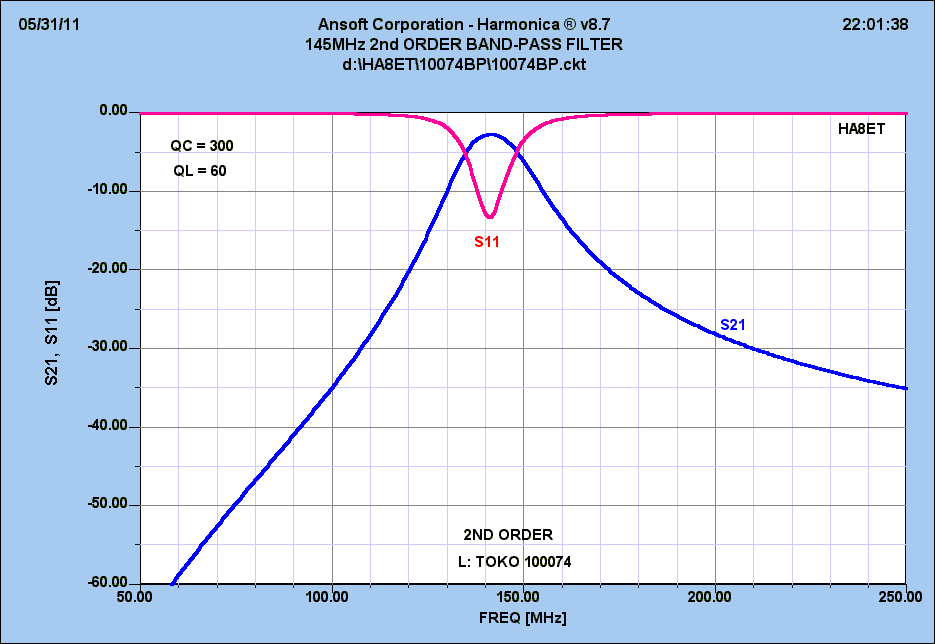
The 144 MHz TX signal behind the MX2 mixer is filtered through a
two-stage band-pass filter before being amplified in a BF996.
Simulated characteristics of the 2nd order BPF:
ME2T-PRO spectrum:
ME2T-PRO_spectr
(pdf)
The G2 of the BF996 connecting to the ALC circuit on the control unit and to the
rear panel PWR poti. We can reduce the final output power to about
5-6Watts.
The controlled gain BF996 amplifier continues the final ASL550 amplifier to a level exceeding more than
100 mW. Through the final
pi-filter we can
reduce the harmonics of the TX signal.
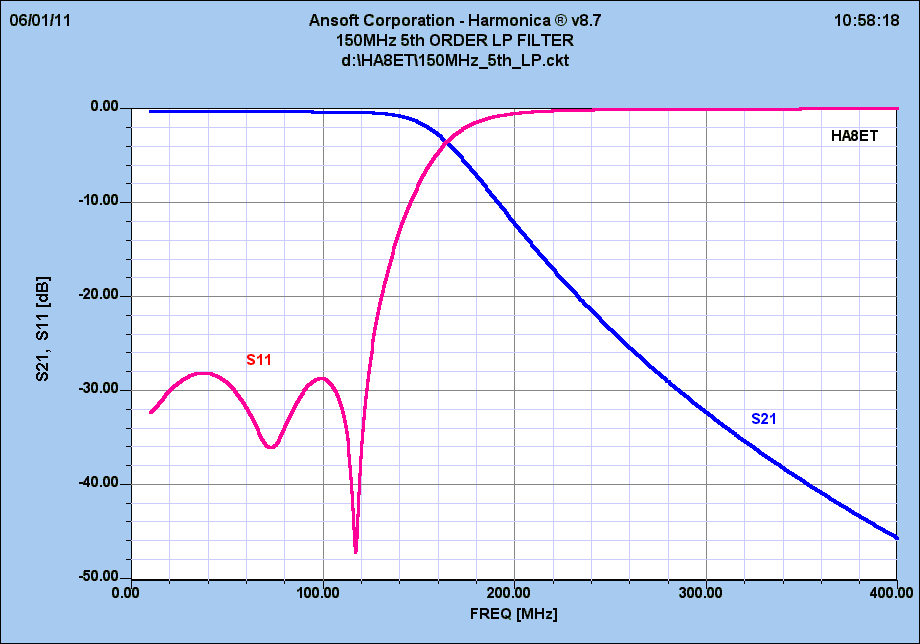
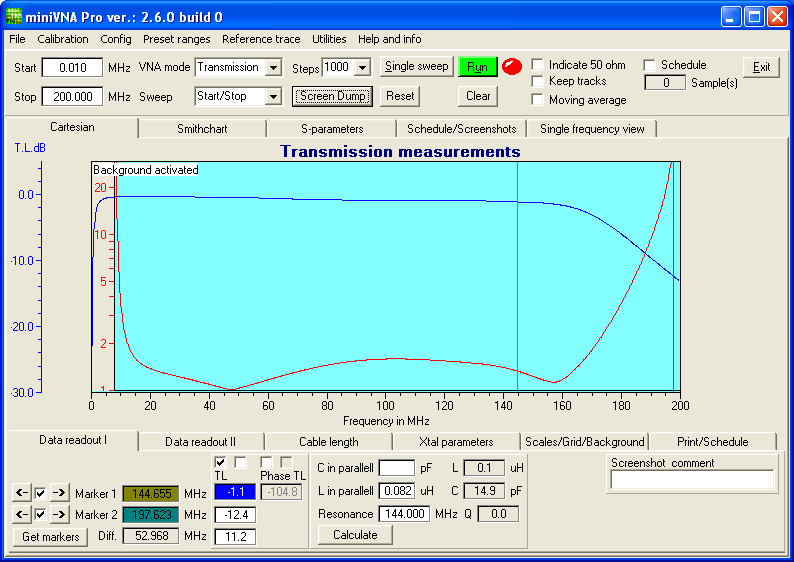
Simulated 144MHz LPF : Measured 144MHz LPF:
|
Low PWR IF input (-20..+27dBm) |
Low PWR IF input (-20..+27dBm) |
|
| J1 | ON |
ON |
| J2 | OFF | ON |
| J3 | OFF | OFF |
| J4 | OFF | ON |
| J5 | ON | OFF(ON- 2nd RX) |
|
High PWR IF input (27..+37dBm) |
High PWR IF input (27..+37dBm) |
|
| J1 | OFF |
OFF |
| J2 | ON | ON |
| J3 | ON | ON |
| J4 | OFF | ON |
| J5 | ON | OFF(ON-2nd RX) |
The J6 jumper gives DC voltage to HA8ET's EXTRA-2
or similar preamplifier.
Before set the J6 ON check the compatibility of other type mast head preamplifiers.
The output is +13.8V on RX, the max current is 300mA.
Don't use this jumper, if you haven't got preamp!
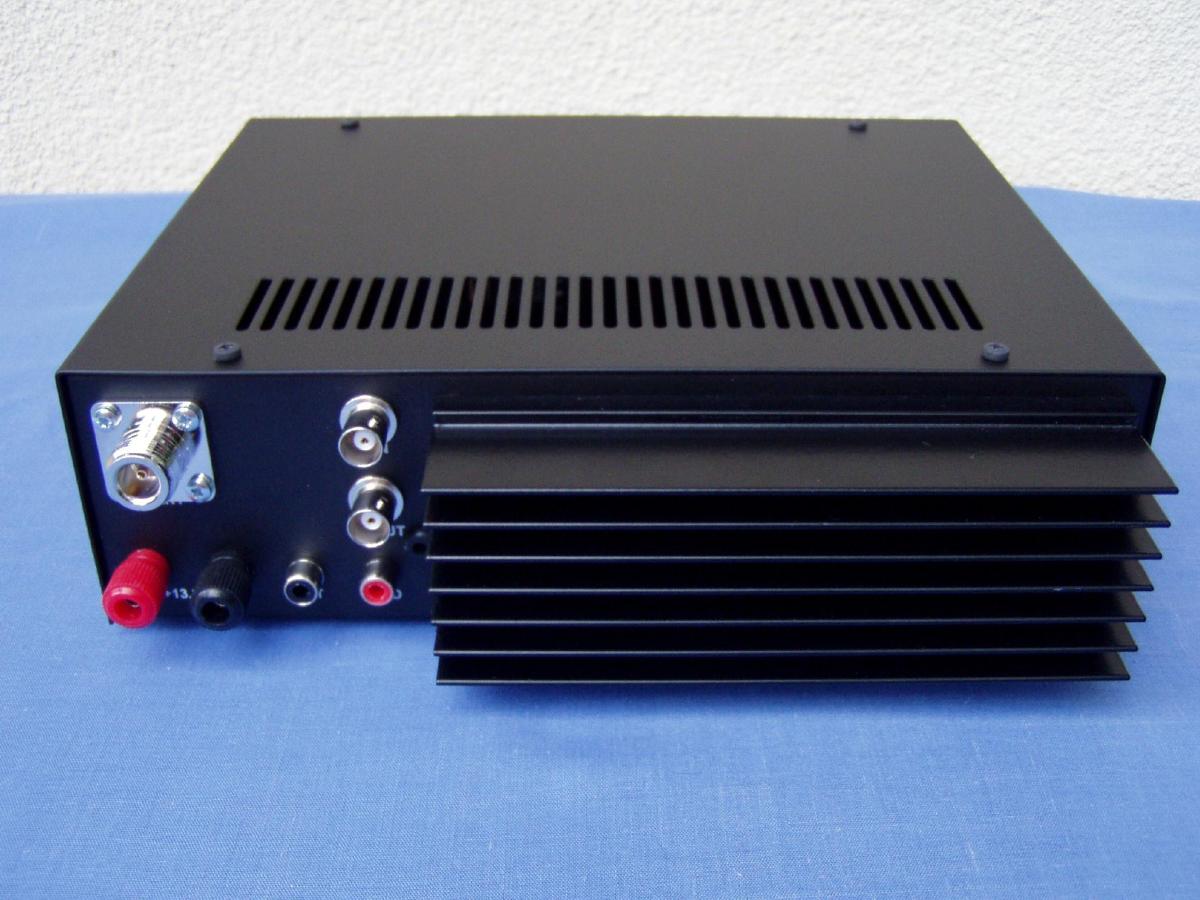
If you use single IF cable between your radio and the transverter, you
connect it to transverter IFin BNC.
On this case the IFout connector is not in use.If you want to use 2nd( SDR for
example) RX put on the J5 jumper.(only single IF cable mode!)
Don't forget to connect the PTT cable between radio SND connector
and ME2T-PRO PTT input! Otherwise the IF power (5W) kills
the transverter
IF output part. The output is saved by antiparallel diodes but it does not help on
case high IF powers!
Never use the attenuator more than 5W IF level!
To save the RX if somebody forget to connect the PTT line we
built in IF RF VOX in the last version.( later Sept.2012)
The RF VOX start to work over +27dBm IF level, only on case single IF cable
mode.
Construction
The base transverter is built on a 1,5 mm double sided glass-fibre epoxy PCB
is fitted into a standard metal sheet box measuring 148 x 74 x 30mm.
PA unit is fitted into 148 x 55 x 30mm standard box. Both is fitted with SMD
technics.
The external box of the transverter is constructed from 1mm painted iron plate. The
heatsink is 150x55mm ALU heatsink material.
If you use the ME2T-PRO continuously on FSK
mode you can order
optional fan module (2pcs
50x50mm DC fans on holder plate).
No overheating problem on case normal room temperature CW, or SSB and contest
mode.
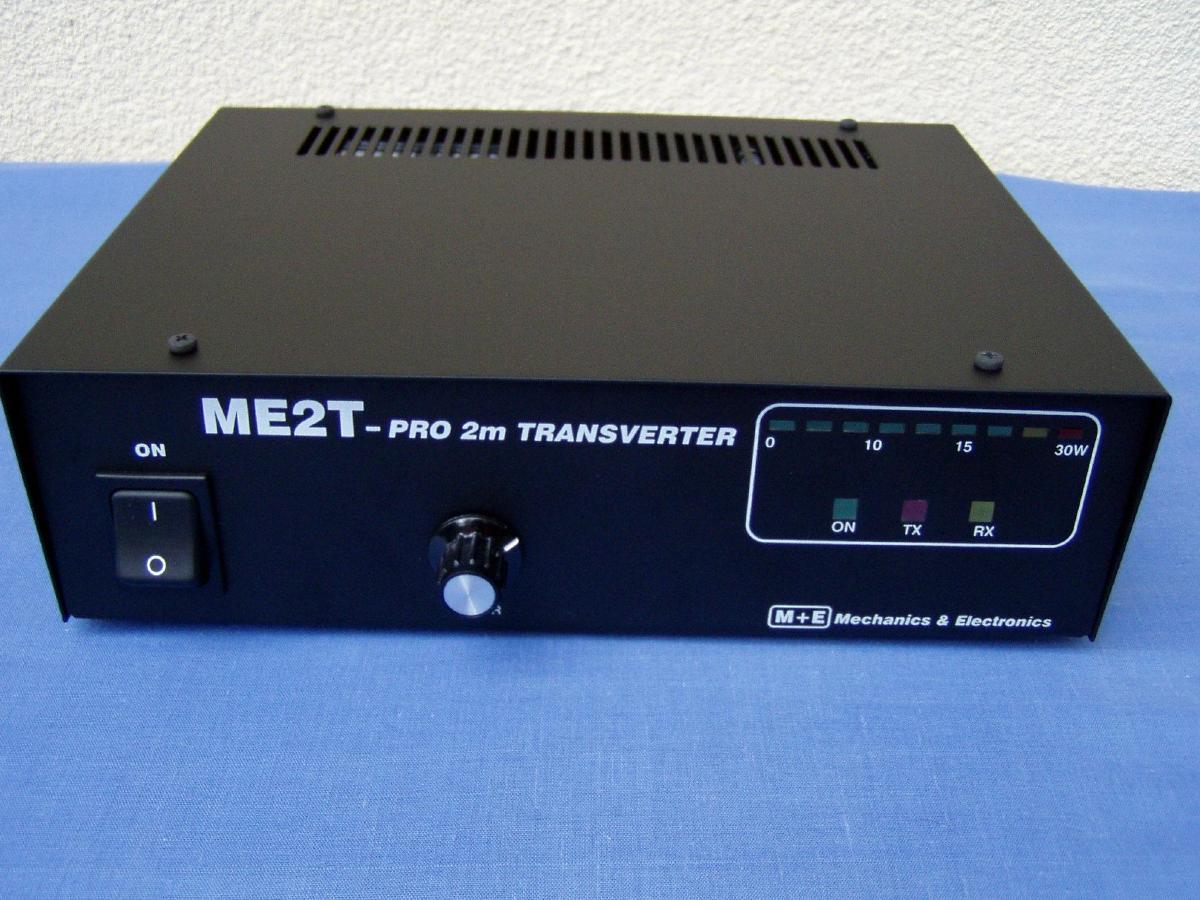
On the front panel we can find the ON/OFF switch, the PWR poti (it can reduce the
output power back to 5-6Watts to external PA's) and the LED bargraph
power meter.
Comments, suggestions we are welcome!
Mechanics & Electronics Inc. All rights reserved. 2014.
